

Winter in New England is unforgiving. When temperatures drop in Connecticut and your heat pump only blows cold air, or stops working completely, it’s easy to assume the worst.
Fortunately, many heat pump failures have straightforward causes, and some can even be resolved without a service call. An experienced HVAC professional can assess your issue and provide prompt options for repairs.
How Heat Pumps Work and Why They Stop
Unlike furnaces, heat pumps do not generate heat by burning fuel. They use refrigerant-filled coils to transfer heat from the outdoors to the inside of your home. The technology allows for high efficiency operation with low electricity usage. However, the complexity of the system means there are more potential components to break down.
The following are basic troubleshooting tips that can reset a malfunctioning system. Try these before calling for a technician:
- Check the thermostat settings. If your heat pump is blowing cold air the solution can be as simple as making sure the thermostat is set to “heat” rather than “cool.” After confirming that the “heat” setting is activated, make sure the fan is on “auto” rather than “on.” Also, make sure the target temperature the thermostat is set on is higher than the current room temperature.
- A dirty air filter can choke off airflow. Dirty air filters can cause your heat pump to struggle, sometimes overheating and shutting down. It is the most preventable cause of heat pump trouble and one that every homeowner can fix easily. Filters should be checked monthly and replaced every one to three months depending upon conditions.
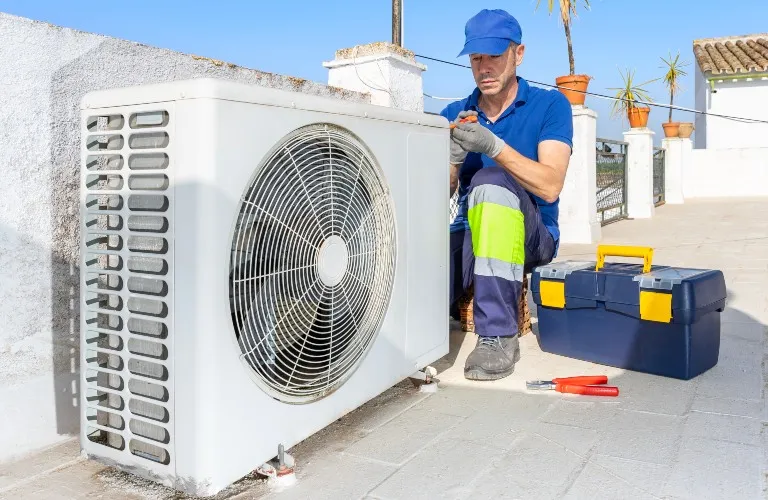
- Trouble with the outside unit. It’s normal for the heat pump’s outdoor unit to become frosty in winter, but heavy ice can cause it to malfunction. If the normal defrost cycle doesn’t automatically melt accumulated ice, consult a technician. Frozen coils will prevent the system from transferring heat. Leaves, dirt, and debris should be cleared from the outside unit periodically.
- Check your electrical panel. Power to the heat pump can be interrupted by power outages, blown fuses, or tripped circuit breakers. Check your electrical panel for tripped breakers and reset them. Circuits that trip consistently may signal a more serious electrical problem that should be addressed by an electrician.
- Refrigerant levels may be low. Low refrigerant levels will prevent a heat pump from maintaining the desired temperature. Your system may have a leak. Check for hissing sounds near the outdoor unit, puddles of liquid near the system, or a frozen evaporator coil. Repairing this situation requires a licensed technician’s help.
- Reversing valve issues. The valve is a critical component that switches the heat pump from cooling to heating and back. The common symptom is a system that gets stuck in one mode and doesn’t heat or cool to the desired temperature. Replacing the valve requires a technician and costs between $450 and $1,200.
- Recognizing signs your system is undersized. A heat pump that does not maintain the desired temperature despite running constantly could be too small for the space it is in. In addition, Connecticut’s humid climate and seasonal temperature swings can strain an old or undersized system. Consulting an HVAC professional can compare your current system against a load calculation determined by your home’s square footage.
When You’re Out of Options, Call an HVAC Professional
Taking simple steps to diagnose a malfunctioning heat pump system can narrow the potential list of issues, and may reveal a simple, inexpensive DIY fix. But Unified Home Solutions is standing by to help anytime your heat pump isn’t functioning properly despite replacing filters, cleaning the outdoor unit, and checking the settings. Our technicians are reliable and ready to provide prompt, professional service. Call for a consultation today.