

Ductless mini-splits have become a common sight in Connecticut, from converted attics to cottages. Most of the time, they work quietly and efficiently, but sometimes the warning lights flash and the room doesn’t warm up.
A blinking light can mean nothing at all, or it can mean the system has shut itself down to avoid damage. A trustworthy HVAC repair and installation company can help you understand the difference and may keep a small problem from becoming expensive.
First, Rule Out Defrost
If the blinking starts on a cold morning while the unit is heating, give it a few minutes. Outdoor coils collect frost when temperatures hover near freezing, and the system periodically reverses itself to melt that ice.
During this automatic defrost cycle, the indoor unit can pause heating for up to 15 minutes, and Fujitsu General units’ OPERATION lights flash while it does. The manufacturer adds that the outdoor fan may stop and steam may rise from the outside unit, both of which are normal. MRCOOL units may display an “F” during defrost, which also needs only a brief wait to clear.
Defrost cycles are common in Connecticut’s damp, 30-degree winters. If the light turns steady and warm air returns, there’s nothing to fix.
Reading an Actual Error Code
When lights continue to flash, or the unit stops running altogether, the system is likely reporting a fault. Manufacturers don’t share a common code language, so some units show letters and numbers on a display while others communicate by blinking one or two indicator lamps a set number of times, pausing, and repeating the sequence.
Manufacturer Fujitsu General advises owners to take note of which lamps are blinking, how fast, and how many times one flashes. With that information and the model name of the unit, a technician may diagnose the issue on the phone, or a solution may be found on the manufacturer’s website.
What You Can Safely Check Yourself
Many error codes trace back to simple causes. Make a few checks before calling for help:
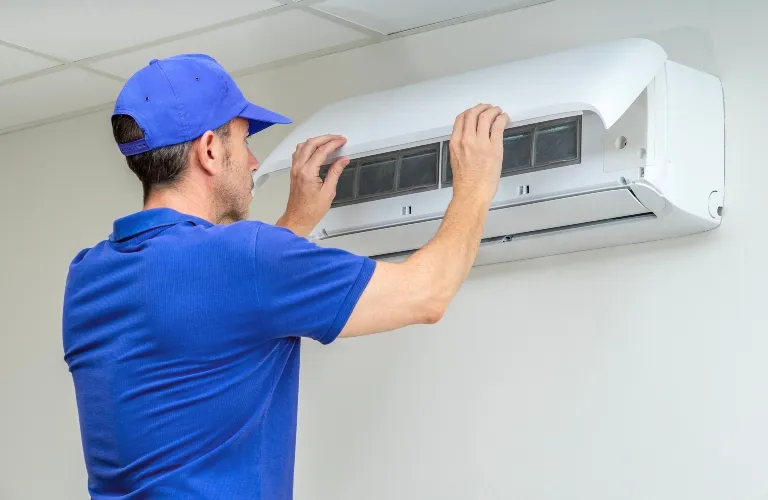
- Clean the filters. Clogged filters restrict airflow and can trip temperature related faults. With the system off, slide them out, vacuum the dust, rinse them, and let them dry completely before reinstalling.
- Check the outdoor unit. Fallen leaves, drifting snow, and ice can block airflow and throw off sensor readings. Clear around the unit before resetting.
- Reset the power. Pioneer suggests clearing the code by turning the unit off and shutting off the breaker before restoring power.
If the code disappears and stays gone, it may have been a one-time glitch, such as from a storm.
When to Call a Pro
A code that comes back after a reset tells you the problem is still there. Call a licensed HVAC technician if:
- The same code keeps returning.
- The unit won’t turn on at all, or it shuts off within minutes of starting.
- Water is dripping from the indoor unit.
- You notice oily residue on the refrigerant lines, which MRCOOL identifies as a possible sign of a leak.
- Your manual says the code involves the compressor, refrigerant, or system pressure.
Refrigerant problems are not a do-it-yourself job. Refrigerant isn’t consumed the way fuel is, so a low charge is a situation a professional should repair.
When the technician arrives, provide your notes and model number. It shortens the diagnosis, which means a smaller bill. If the estimate on an older system is steep, Carrier says repair usually makes sense when it costs less than half the price of a new unit.
Prevention Beats Repair
The U.S. Department of Energy recommends having a professional service your heat pump at least once a year. Energize Connecticut suggests reducing wear and tear by leaving the unit on a comfortable temperature setting year-round.
When your unit needs repair, or blinks a cryptic message, call Unified Home Solutions for help. Regular maintenance is critical to a system that runs smoothly.